FHA loans offer flexible terms for borrowers with lower credit scores or limited down payments, leveraging the Amortization Table to track loan repayment progress. Key eligibility factors include credit history, income, and property type. West USA Realty emphasizes reviewing this table for informed financial decisions. The application process involves document gathering, loan application submission, verification, approval, and closing, culminating in a structured amortization schedule.
In the intricate landscape of mortgage financing, Federal Housing Administration (FHA) Loans stand as a beacon for prospective homebuyers navigating the complexities of home ownership. These loans, designed to democratize access to housing, offer appealing terms that cater to diverse financial scenarios. However, understanding the mechanics behind FHA Loans is crucial for borrowers aiming to demystify the process. This article delves into the intricacies of FHA financing, shedding light on its benefits and operational nuances, with a special emphasis on providing an in-depth exploration of amortization tables—a vital tool for borrowers to comprehend their loan’s structural breakdown.
- Understanding FHA Loan Basics: An Overview
- Eligibility Criteria: Who Qualifies?
- Navigating the Amortization Table: Repayment Breakdown
- Benefits and Drawbacks: Weighing Your Options
- The Application Process: Step-by-Step Guide
Understanding FHA Loan Basics: An Overview

FHA loans are a type of mortgage insurance program offered by the Federal Housing Administration (FHA), designed to make homeownership more accessible to borrowers with lower credit scores or smaller down payments. Understanding how these loans work is crucial for anyone considering this option, especially when navigating the complexities of loan payment structures. One key component that borrowers should be familiar with is the amortization table, which outlines the breakdown of each monthly payment over the life of the loan.
The FHA loan program provides a structured framework for borrowing, ensuring predictability in monthly payments. When you take out an FHA loan, your lender will create a detailed amortization schedule, detailing how your initial loan amount will be paid off in equal installments over time. This table is essentially a roadmap that breaks down the interest and principal components of each payment, allowing borrowers to see exactly where their money is going. For instance, a $300,000 FHA loan with a 30-year term would result in 360 monthly payments, each reducing the remaining balance while covering interest expenses.
Loan payment schedules for FHA loans are calculated based on several factors, including the principal amount borrowed, the interest rate, and the length of the loan term. These factors determine the size of each monthly payment and the overall cost of borrowing over time. West USA Realty emphasizes that borrowers should carefully review their amortization table to understand how their payments will change over the life of the loan, as this knowledge empowers them to make informed financial decisions tailored to their individual circumstances. By understanding these concepts, potential homeowners can ensure they are making responsible choices and effectively managing their long-term financial obligations.
Eligibility Criteria: Who Qualifies?

The Federal Housing Administration (FHA) loans are designed to make homeownership more accessible by offering flexible lending terms and lower down payment requirements. However, navigating these loan programs can be complex. Understanding the eligibility criteria is a crucial first step for prospective homebuyers. This involves evaluating factors such as credit history, income levels, and the potential property type.
To qualify for an FHA loan, borrowers need to meet specific criteria outlined in the agency’s guidelines. One key component is the borrower’s creditworthiness, which is assessed through their credit score and payment history. While there’s no one-size-fits-all requirement, a minimum credit score of 580 is typically necessary for a down payment as low as 3.5%. Higher scores can grant access to lower down payments and better interest rates. Additionally, lenders will review the borrower’s debt-to-income ratio to ensure they can manage the loan payments along with their other financial obligations.
An amortization table plays a vital role in understanding the long-term implications of an FHA loan. This table details how your loan payment is distributed between principal and interest over the life of the loan, helping borrowers plan and budget effectively. A well-informed borrower can use this tool to compare different loan offers and make informed decisions about their financial future, especially when considering the potential for refiencing down the line. West USA Realty emphasizes the importance of exploring these options with a knowledgeable lender to optimize your homeownership journey.
Navigating the Amortization Table: Repayment Breakdown
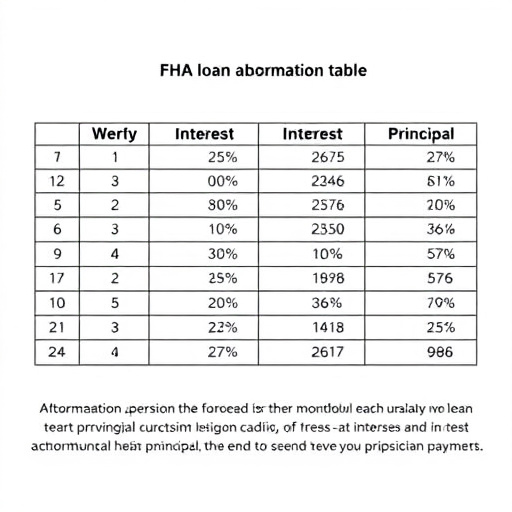
Understanding the FHA loan repayment process is crucial for borrowers, especially when navigating the intricate details of an amortization table. This table serves as a comprehensive loan payment schedule, breaking down each monthly payment into interest and principal components. By scrutinizing this table, homeowners-to-be can gain valuable insights into their financial obligations and make informed decisions.
The amortization table is a powerful tool that illustrates how your FHA loan will be paid off over time. Each row typically represents a month of the loan term, showing the breakdown of interest charges and principal reduction. For instance, during the early years of an FHA loan, a significant portion of each payment goes towards interest, with only a small percentage dedicated to reducing the principal balance. As the loan progresses, this distribution evolves, ensuring that by the end of the term, the principal is substantially decreased.
West USA Realty emphasizes the importance of not only understanding but actively utilizing this table. Borrowers should regularly review their amortization schedule to track progress and plan accordingly. For example, if a borrower notices that a substantial portion of their initial payments goes towards interest, they can strategically adjust their budget, ensuring they are contributing as much as possible to principal reduction, thus saving money in the long run. By staying informed and proactive, homeowners can ensure their FHA loan is managed efficiently.
Benefits and Drawbacks: Weighing Your Options

FHA loans offer a range of benefits for borrowers, particularly first-time homebuyers or those with lower credit scores. One significant advantage is the lower down payment requirement compared to conventional loans, making homeownership more accessible. Moreover, these loans provide flexible credit criteria, allowing individuals with modest incomes or minor credit issues to qualify. The Federal Housing Administration (FHA) insures these mortgages, reducing the risk for lenders and potentially lowering interest rates for borrowers. This insurance also offers peace of mind, as it protects against private mortgage insurance (PMI) requirements typically seen in conventional loans.
However, there are drawbacks to consider. FHA loans often come with higher borrowing costs due to mortgage insurance premiums. These fees can impact the overall cost of borrowing and should be factored into any financial planning. Additionally, borrowers may face stricter guidelines regarding property conditions, which could limit their options when purchasing a home. Another consideration is the potential for less flexibility in terms of loan term and interest rate adjustments compared to other loan types. For instance, an amortization table might reveal higher monthly payments over the life of the loan, especially if interest rates fluctuate.
Weighing these options, borrowers should assess their financial situation and long-term goals. West USA Realty experts suggest evaluating your ability to afford both the initial costs and ongoing expenses. Understanding how the loan payment schedule will fit within your budget is crucial. For instance, a borrower with a stable income and good credit might find that the benefits of an FHA loan outweigh the drawbacks, especially if they plan to stay in their home for an extended period, allowing them to build equity over time. Ultimately, careful consideration and professional guidance can help borrowers make an informed decision tailored to their unique circumstances.
The Application Process: Step-by-Step Guide

The process of applying for an FHA loan involves several crucial steps, each designed to ensure borrowers meet specific eligibility requirements and gain a clear understanding of their financial obligations. Let’s break down this process into a comprehensive guide that walks you through from start to finish. Firstly, prospective homeowners should assess their financial standing to determine if they qualify for an FHA loan. This includes verifying income, employment history, and ensuring adequate funds for the initial down payment. Once pre-approved, borrowers can begin gathering necessary documents such as tax returns, bank statements, and proof of residency.
The next step involves submitting a loan application through an approved lender. During this phase, borrowers will be asked to provide detailed financial information, including assets, debts, and any previous credit history. It’s important to note that while FHA loans offer flexibility in terms of down payment requirements, lenders will still scrutinize your creditworthiness based on factors like credit score, debt-to-income ratio, and loan-to-value ratio. After the application is received, the lender will thoroughly review all submitted documents and verify their accuracy. This step is critical for ensuring a smooth approval process and finalization of the amortization table.
Once the application is approved, the borrower receives formal notification and can proceed with closing on the loan. At this point, it’s crucial to understand the intricacies of the loan payment schedule, which outlines the periodic payments required to repay the loan. These payments typically include principal, interest, mortgage insurance (MI), and taxes, and are calculated based on factors like loan amount, term length, and interest rate. West USA Realty emphasizes the importance of borrowers understanding this schedule well in advance of closing to ensure they can comfortably manage their financial obligations moving forward.