Conventional loans in the West USA Realty market offer flexible financing with amortization tables, detailing how each payment reduces interest and principal over time. Loan-to-value ratios (5-20%) guide down payment requirements. Timely payments build equity and positive credit history. Amortization tables help borrowers anticipate cash flows, adjust budgets, and make informed decisions for long-term financial stability. A structured approach, including regular reviews, ensures optimal loan management.
In the intricate landscape of financing, conventional loans stand as a cornerstone for individuals and businesses seeking capital. However, navigating these loans can be a complex task, often fraught with perplexing jargon and less-than-transparent structures. The conventional loan process, with its various terms and conditions, can leave borrowers unaware of the full financial implications. This is where a robust understanding of amortization tables becomes indispensable. By demystifying this aspect, we empower borrowers to make informed decisions, ensuring they grasp the full scope of their loan obligations. This article aims to serve as a comprehensive guide, shedding light on conventional loans and the critical role of the amortization table in their management.
- Understanding Conventional Loan Basics: An Overview
- The Role of Amortization Table in Repayment Planning
- Step-by-Step Guide to Conventional Loan Management
Understanding Conventional Loan Basics: An Overview

Conventional loans, a cornerstone of the mortgage market, offer a wide range of options for borrowers seeking to purchase or refinance a home. Understanding the fundamentals of these loans is essential for anyone navigating the real estate landscape, especially in the competitive market of West USA Realty. At its core, a conventional loan is a type of financing provided by lenders, typically based on the borrower’s creditworthiness and the value of the property. Unlike government-backed loans, these loans are not insured by federal agencies, relying instead on private financial institutions for underwriting and management.
The heart of a conventional loan lies in its amortization table, a detailed schedule that breaks down the loan payment into principal and interest components. This table allows borrowers to see how their payments are allocated, ensuring they understand the breakdown of their monthly outlay. A typical loan payment includes both the interest accrued during the period and a portion of the principal, gradually reducing the loan balance over time. This structured approach to repayment is a key advantage, enabling borrowers to build equity and ultimately own their homes free and clear. For instance, a $200,000 loan repaid over 30 years at an interest rate of 4% would result in approximately 480 monthly payments, with each payment meticulously allocating funds to reduce the debt.
One of the primary considerations for borrowers is the loan-to-value (LTV) ratio, which is the percentage of the property’s value financed by the loan. Conventional loans often require a higher down payment compared to government-backed options, typically ranging from 5% to 20% of the purchase price. This down payment serves as a buffer against the remaining loan balance, reducing the risk for lenders and potentially lowering the borrower’s long-term interest costs. West USA Realty professionals can guide clients through this process, offering insights into the optimal LTV ratio based on market conditions and individual financial situations. Effective loan management, including adhering to a consistent loan payment schedule, is crucial to maintaining a solid financial foundation for homeowners.
The Role of Amortization Table in Repayment Planning
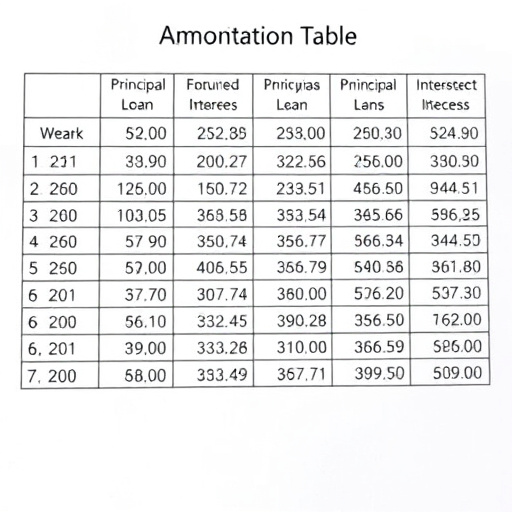
An amortization table serves as a crucial tool for borrowers navigating the complexities of conventional loans. This detailed schedule breaks down each payment into principal and interest components, enabling borrowers to understand how their funds are allocated over time. For instance, consider a $300,000 30-year mortgage at 4% interest. The amortization table reveals that initial payments primarily cover interest, with only a small fraction applied to the principal balance. As the loan term progresses, however, the principal component increases while the interest portion decreases, leading to a significant reduction in the overall debt. This strategic repayment planning is essential for West USA Realty clients aiming to manage their financial obligations effectively.
Regularly reviewing an amortization table allows borrowers to anticipate future cash flows and make informed decisions about their finances. For example, understanding that a higher loan amount means larger initial interest payments can encourage responsible borrowing practices. Additionally, it highlights the importance of consistent, on-time loan payments. Data shows that timely repayment not only avoids penalties but also builds positive credit history, which is invaluable for future financial endeavors. By closely examining their amortization table, borrowers can identify potential issues early on and adjust their budgets accordingly, ultimately fostering long-term financial stability.
In the context of conventional loans, a well-planned loan payment schedule, guided by an amortization table, empowers borrowers to achieve their financial goals. Whether it’s buying a home or funding education, this tool offers transparency and predictability. For West USA Realty clients, it means making informed choices about their properties, investment strategies, and long-term planning. By embracing the power of an amortization table, borrowers can confidently navigate their loan repayments with a clear understanding of their financial trajectory.
Step-by-Step Guide to Conventional Loan Management

Managing a conventional loan requires a structured approach to ensure timely payments and optimal financial health. This step-by-step guide will equip borrowers with the knowledge to navigate their loan journey effectively. Firstly, understand the loan agreement, including interest rates, repayment terms, and any associated fees. West USA Realty emphasizes the importance of clear communication with lenders to clarify any doubts.
Once the loan is approved, creating a comprehensive loan payment schedule is crucial. This involves calculating the principal and interest payments for each period, typically on a monthly basis. An amortization table is a powerful tool here, detailing how each payment reduces the loan balance. For instance, a $200,000 30-year conventional loan at 4% interest would have significantly varying monthly payments, and an amortization table would illustrate this breakdown, offering borrowers a clear view of their financial obligations.
Next, automate loan payments to ensure consistency. Many lenders offer automatic debit services, aligning payments with your pay cycle. Regularly reviewing the loan payment schedule is essential, especially when life events impact your financial situation. Adjustments may be necessary to maintain a consistent repayment strategy, ensuring you meet the terms of your conventional loan without delay. This proactive approach, combined with the right tools, empowers borrowers to manage their loans effectively.